Faith, Icons, and the Shape of Belief
Definition/Description
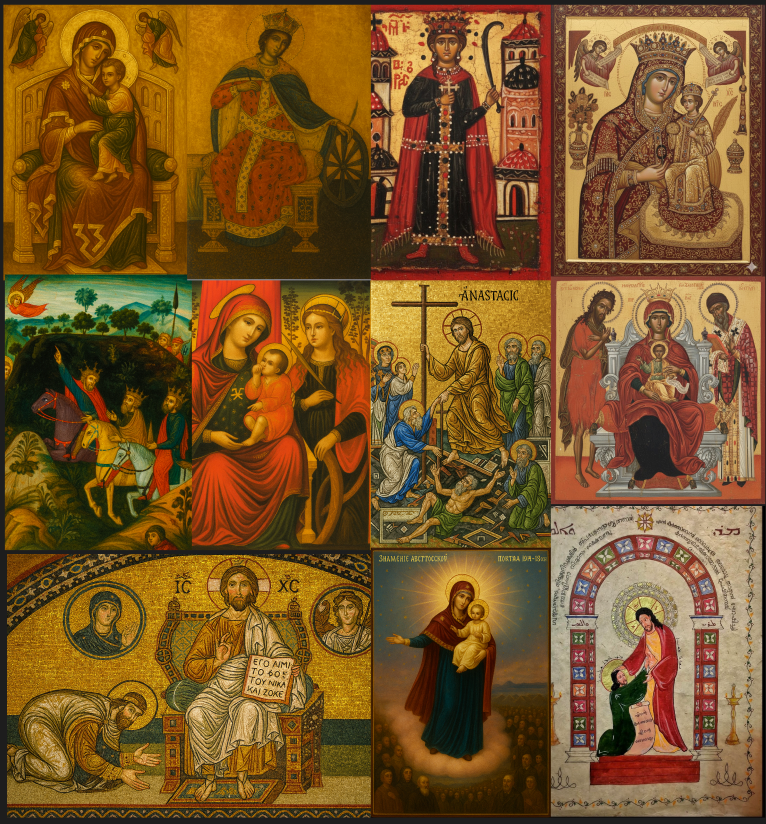
Faith often begins in silence, in that unspoken dialogue between what we see and what we hope for. Humans are meaning-makers—we turn ordinary matter into symbols. A candle becomes a prayer. A touch on a wooden cross becomes a plea for mercy. A stone, a drawing, or even a pencil could, in theory, carry the same intent. The question, then, is not about the material, but about the truth it represents. Religious icons, particularly in Christianity, are not simply objects; they are visual theologies. They carry centuries of prayer, story, and presence within them.
Context
An icon’s power doesn’t arise from pigment or wood, but from its participation in a lineage of belief. Within the Christian tradition, icons were created through fasting, prayer, and contemplation—meant to reveal the divine rather than replace it. They act as windows, not walls. The eyes of Christ in an icon, for example, are not painted to be looked at but to be looked through—to glimpse the eternal gaze looking back.
Creating one’s own symbol is a natural human impulse; it can be beautiful, even sincere. Yet, a personal invention lacks what ancient icons carry: the collective breath of generations. When a believer faces an icon of Mary or St. Michael, they do so alongside countless others who have whispered the same prayers across time. The icon’s surface becomes a meeting place between heaven and earth, but also between the individual and the entire Church. A handmade symbol can express faith, but an icon situates that faith within communion—a shared horizon of meaning that outlives any single person.
This shared symbolism is why the Church has preserved certain images as sacred. They are not cages for belief but vessels that have proven capable of holding it. In venerating an icon, one steps into a rhythm already moving—one that has been carried through the centuries by monks, mothers, martyrs, and mystics alike.
Staying Faithful
To remain faithful once an icon or saint has become your companion in prayer means learning to see through it daily. Faith is not kept alive by intensity but by rhythm—by repetition with awareness. Light a candle not for effect, but for remembrance. Whisper a prayer not for magic, but for conversation. Read about the life of your chosen saint until their story feels braided with your own. In doing this, the icon becomes less a possession and more a presence—a steady mirror reminding you of the divine within ordinary days.
Community and Continuity
Faith withers in isolation. The icon, then, also points outward—to the Church, to others who believe, to the chorus of voices that echo your own longing. In cathedrals or quiet chapels, believers share the same icons, the same names whispered in prayer. This collective devotion builds a kind of invisible architecture, a home for the soul. Whether you find that through parish life, online prayer circles, or pilgrimage, the key is participation—letting the larger body of faith hold you when your own hands grow tired.
Final Thoughts
Faith seeks form. The difference between a random object and a sacred icon is not beauty or craftsmanship, but belonging. A pencil could remind you of God’s creativity, but a Christian icon bears the trace of a people who have already met the divine through it. By aligning with these living symbols, faith finds both root and direction. The icon becomes a threshold—not a relic of superstition, but a shared map of the invisible world, guiding the believer to a truth too vast to be contained in any single image.